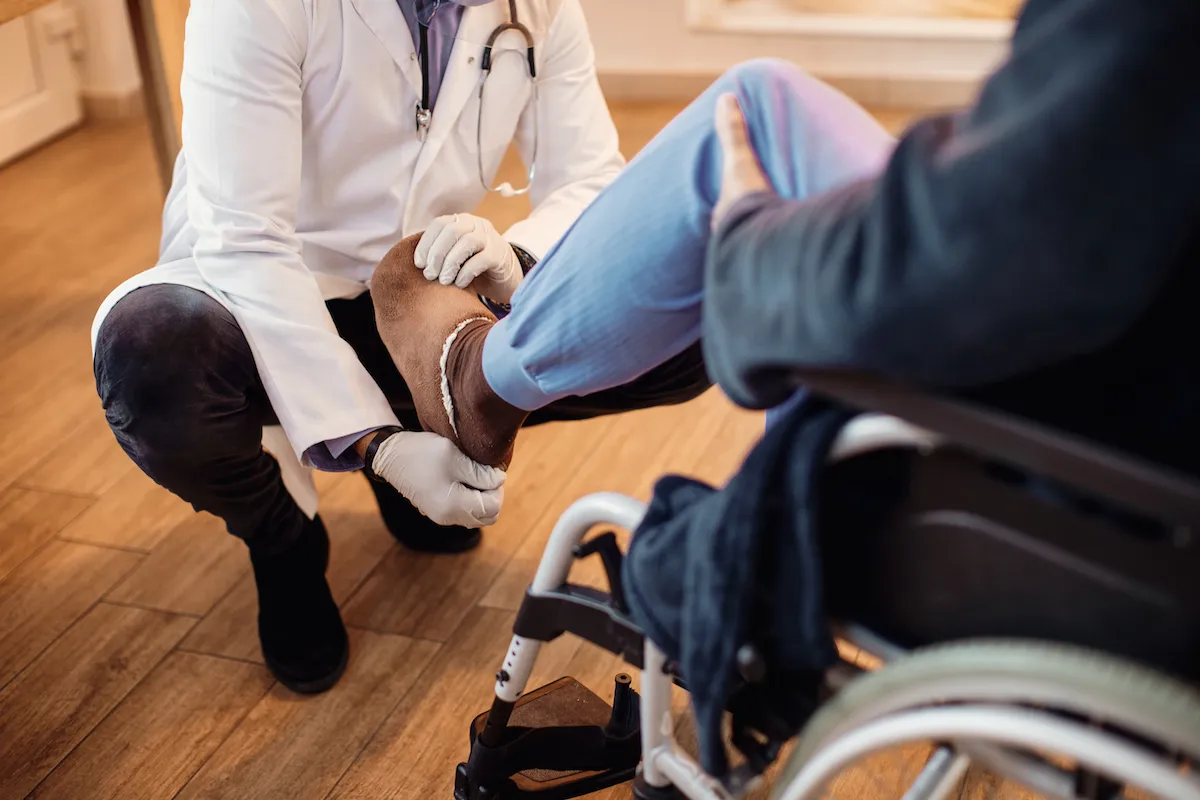
Chronic venous insufficiency (CVI) happens when the veins in your legs cannot move blood back to your heart well. Blood pools, legs ache and swell, and skin can change over time. First Coast Cardiovascular Institute (FCCI) says CVI affects about 25 million Americans, roughly 5% of the U.S. population, and is one of the most common types of venous disease.
Not just varicose veins
FCCI calls it one of the biggest misunderstandings: CVI is not simply another word for varicose veins. It can come from hereditary factors, hormones, trauma or a previous deep vein thrombosis. Some people with CVI have obvious bulging veins. Others mostly notice swelling and heaviness.
Signs to watch
- Pain when standing that eases when legs are raised
- Unexplained swelling
- Itching and red or brown skin
- An aching feeling or leg weakness
- Leg ulcers
Why it is worth acting on
FCCI warns that if left untreated, CVI can lead to edema, chronic and even life-threatening infections of the lower legs, and blood clots. Its vascular lab adds that untreated CVI can cause leg pain, swelling, skin changes and ulcers. None of that is a reason to panic. It is a reason to get checked instead of waiting it out.
How it is diagnosed
A venous duplex ultrasound is the main tool. It shows which way blood is flowing and which vein segments are leaking or blocked. At FCCI, a full study may include both legs and usually takes about an hour. For deeper problems in the legs, pelvis or belly, FCCI also uses intravascular ultrasound (IVUS), which images veins from the inside, and venography, an x-ray exam of blood flow in the veins.
How it is treated at FCCI
The plan depends on where the problem is. For surface veins, FCCI offers endovascular laser and phlebectomy. For deep veins, it offers venoplasty, which widens a vein with a small balloon, and stents, which help keep veins open for better blood flow. Your vein doctor walks you through the options that fit your results.
About the Vein Clinic at FCCI
Chronic venous insufficiency is a long-term condition, so it helps to have a long-standing team. FCCI has cared for Northeast Florida since 2002, and its Vein Clinic is led by board certified endovascular and vascular physicians. Because CVI can travel with skin changes and wounds, having wound care, cardiology, sleep and lung specialists in the same building matters.
CVI is confirmed with a venous duplex ultrasound in FCCI's IAC accredited lab, performed by registered vascular technologists. Treatment is outpatient, which FCCI says keeps costs down.
Getting ready for your visit
- Call 904.493.3333 to book, Monday to Friday, 8 a.m. to 5 p.m.
- Complete the New Patient Registration form from Patient Resources and list how long your legs have felt heavy or achy
- Bring your ID, insurance card and a list of your medicines
- Wear shorts or loose pants so your legs are easy to check
- Write down when symptoms started and what makes them better or worse
- Need to reschedule? FCCI asks for at least 24 hours' notice
Bring your CVI history to the visit or go over it by phone. Please do not type it into an online form.
Think your veins might not be pushing blood back up like they should? Call 904.493.3333 Monday through Friday, 8 to 5, or book on our Book page. Ask for the free 20-minute vein screening at FCCI's Southside office, 7011 AC Skinner Parkway, Ste 160. If leg swelling arrives suddenly with chest pain or shortness of breath, call 911.